Fujifilm GFX 100S II
the evolution of the species

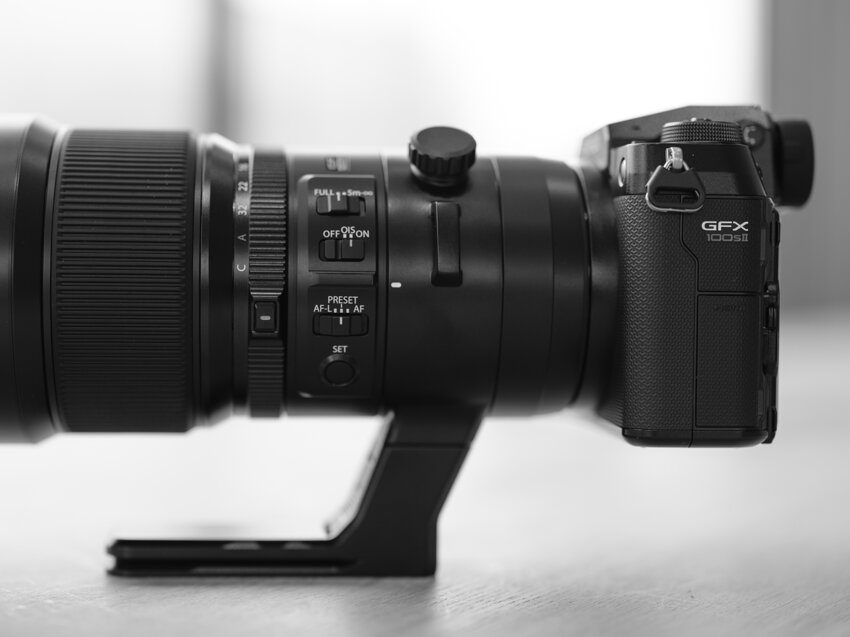
April 2012, Fujifilm re-enters the interchangeable lens camera market by announcing a new professional mirrorless system.
Mirrorless cameras, at the time, were already not a novelty. Most of the time, however (with rare exceptions), these were systems rather lacking in lenses and accessories. Moreover, these systems were chosen by brands that until then had not managed to find a way to chip away at the photographic dominance of the Nikon and Canon duopoly. A duopoly at the top of sales, which was careful not to market products that could cannibalize the wealth of lenses and accessories built up over the years for their DSLRs.
Few people trusted Fujifilm's choice, mainly because they had chosen to give up the mirror prematurely and had chosen the APSC sensor format.
Twelve years have passed and we all know how things turned out.
September 2016, while digital SLRs desperately try to prolong their agony, Fujifilm announces the GFX 50S, the first medium format mirrorless designed to break out of the usage patterns to which these types of cameras had been relegated.
I immediately fell in love with the GFX. For many it was slow and bulky, but it was clear that they had no experience with this format to be able to give a considered judgment.
©Max Angeloni - All rights reserved

Photokina 2016 - presentation of the GFX 50S
A judgment that, most of the time, led to comparing the overall performance of the GFX with that of more "traditional" format digital cameras. This highlighted a lack of experience in the specific use that, until then, had characterized medium format.

FUJIFILM GFX 50S - Fujifilm GF 250mm F4 R LM OIS WR (test demo photo of the lens made together with Riccardo Scotti - Fujifilm Italia



The GFX has completely changed my approach to professional photography, offering me new creative opportunities that were previously unthinkable. Unthinkable especially outside the studio or on sets where you can shoot with all the time you need.
The digital medium format, from this moment on, thanks also to Hasselblad, was finally legitimized.
In 2018, when all the brands finally abandoned the "mirror," Fujifilm announced the GFX 50R and, above all, unveiled a demo of the GFX 100, which would only be marketed the following year.

FUJIFILM GFX 50R - Fujifilm GF 23mm F4 R LM WR
Already the GFX 100, an evolution of the 50s not only for reaching 100MP and the image stabilizer but also for the autofocus update thanks to phase detection, which makes the GFX 100 the first medium format camera to use this technology.
The GFX 100 is probably the camera I have loved the most in my life.
I have used it for many photographic situations, often even those in which a faster or lighter camera would have been more suitable. But once you have seen even a single file from the GFX 100, a sort of physical addiction is created inside you.
It's like a good plate of Carbonara, once you have tasted the first forkful you can no longer settle for plain pasta.
Certainly, the X100VI and the XH2s always find a place in my camera bag, especially when discretion and operational speed are the priorities for the photographic work to be done. And therefore I continue to use them with great satisfaction. But the GFX 100 is the GFX 100.

FUJIFILM GFX 100 - Fujifilm GF 80mm F1.7 R WR



In 2021, the GFX series took a further step towards the "normalization" of medium format. The GFX 50S II and the GFX 100S are essentially more compact versions of the previous models. In terms of performance and image quality, there are no differences. Compared to the GFX 100, the new model has a less refined electronic viewfinder and loses the possibility of having a battery grip. For many, the smaller body and certainly more affordable price are valid reasons to take the step towards the larger sensor.

FUJIFILM GFX 1OOS - Fujifilm GF 110mm F2 R LM WR
In 2023, the GFX 100II comes to life. New sensor and new image processor. In reality, the image quality remains fundamentally very similar to previous GFX models. The real innovation is the new autofocus system that allows the GFX to get closer and closer to the speeds of other cameras with smaller sensors available on the market. Now, you shouldn't expect the exuberance of the X-H2s (to stay within Fujifilm) or other sports cameras offered by other brands. But the gap between medium format and the rest of the world has further narrowed in this respect.
Video performance has also reached achievements that were unthinkable until recently.
But the GFX 100II, like the original GFX 100, is an extremely complete professional camera intended for a specific user base.
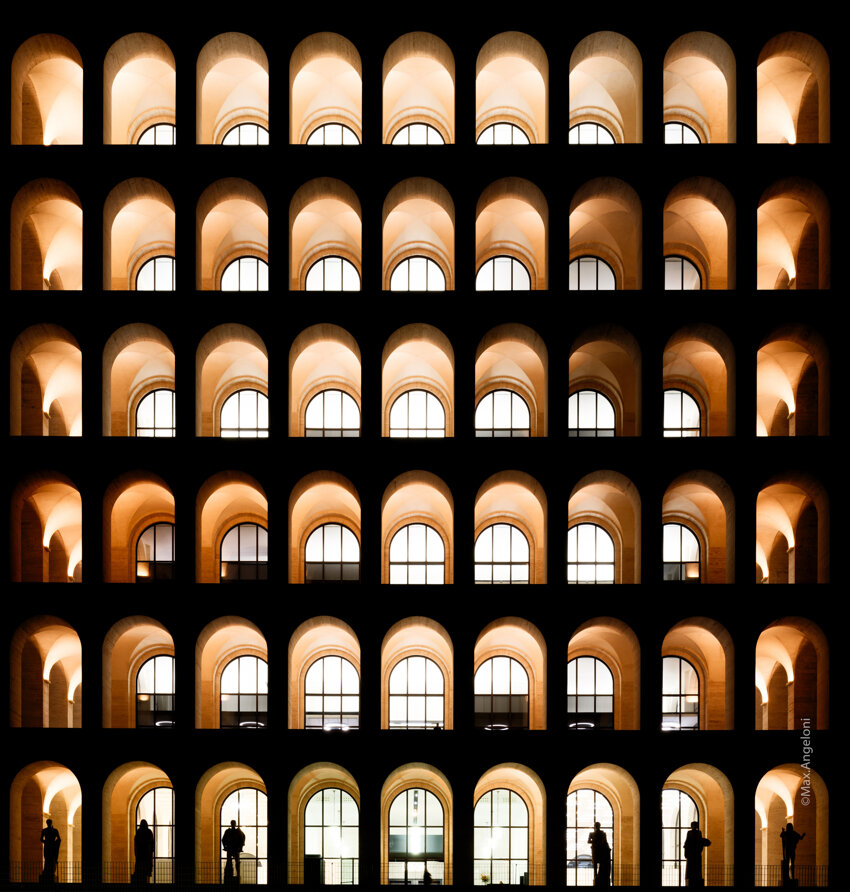
FUJIFILM GFX 1OO II - Fujifilm GF 30mm F5.6 T/S


The new GFX 100S II is positioned halfway for those who want extremely high image quality but also desire greater mobility. Users who mainly focus on photography and less on video. Photographers who, for the same price as a mid-high range full frame, can purchase a highly performing medium format.
The GFX 100S II is not a downgraded GFX 100 II. The GFX 100S II is rather a photographic tool stripped of all those options that are of secondary importance for many users.
I've always said this. The GFX 100 and the GFX 100S travel on two distinct but parallel paths. The 100S did not replace the original 100, just as the 100 SII does not replace the 100 II. They are two options that Fujifilm offers to meet the different needs of its users.
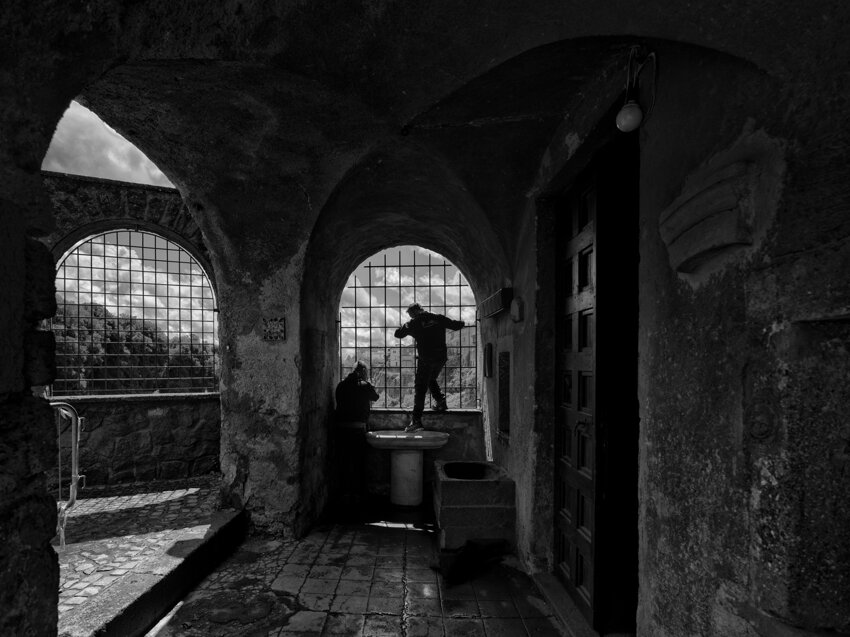
FUJIFILM GFX 100S II - Fujifilm GF 23mm F4 R LM WR
GFX 100S II, first contact.
If it weren't for the new BISHAMON-TEX coating, already seen with the GFX 100II, it would be difficult to distinguish the new camera from the previous model (GFX 100s).
But once it's turned on, we realize that while the body has remained fundamentally unchanged, the soul is completely new.
First of all, the new X-Processor 5 image processor guarantees most of the new functions introduced with the GFX 100 II and some improvements over the GFX 100S.
Base ISO 80, the new Reale Ace simulation, the 5,760,000-dot viewfinder, further optimization of the sensor to improve the image especially in the peripheral areas, and new intelligent autofocus functions for subject recognition and tracking.
The image stabilizer also reaches 8 stops.
Many will now wonder what the real differences are between the GFX 100II and the GFX 100s II, since at first glance the performance seems almost identical.
As previously mentioned, the GFX 100II, operationally, is aimed at a type of user for whom photography and video are equally important. Moreover, size and price are not an issue.



FUJIFILM GFX 100S II - Fujifilm GF 55mm f/1.7 R WR
The GFX 100S II, on the other hand, precisely because it is more geared towards photography, does adopt the new image processor like the GFX 100 II but a new and different image sensor.
Now, what does all this translate into?
In reality, in photography we won't notice anything.
In fact, the GFX 102MP CMOS II HS that equips the GFX 100II offers a readout speed about twice as fast as the previous one.
But this is a solution adopted mainly to maintain a very high standard of video performance.
The X-Processor 5 in combination with the new GFX 102MP CMOS II sensor (without HS compared to the GFX 100 II), implemented in the GFX 100S II, is instead responsible for the subject detection AF and allows you to take advantage of AI deep learning technology and advanced tracking and detection AF, not only on human faces and eyes, but also on animals, birds, cars, motorcycles, bicycles, airplanes, and trains.
So if you are mainly into photography, I would say there is nothing to worry about.
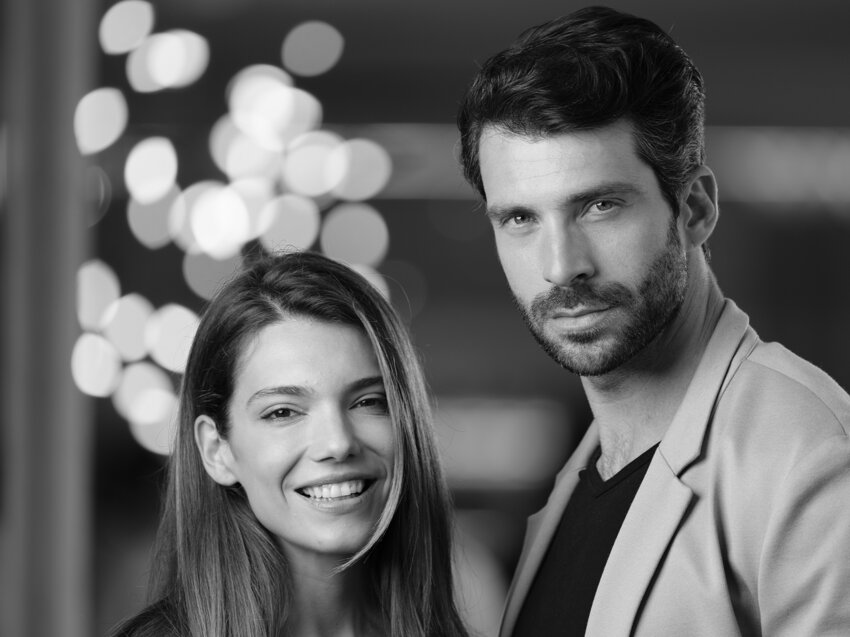
FUJIFILM GFX 100S II - Fujifilm 500mm F5.6 R LM OIS WR
That's enough for now, it's hard to add anything at the moment. For those who know me well, they know perfectly well that I consider it impossible to write an accurate review after just a couple of weeks of using a photographic device.
The web is already full of “copy and paste” reviews and hasty, superficial judgments. I am from the old school, the one of specialized magazines, so to speak, when there was all the time to thoroughly test a camera or a lens to really understand its features, strengths, and weaknesses. But by now I belong to another photographic era.
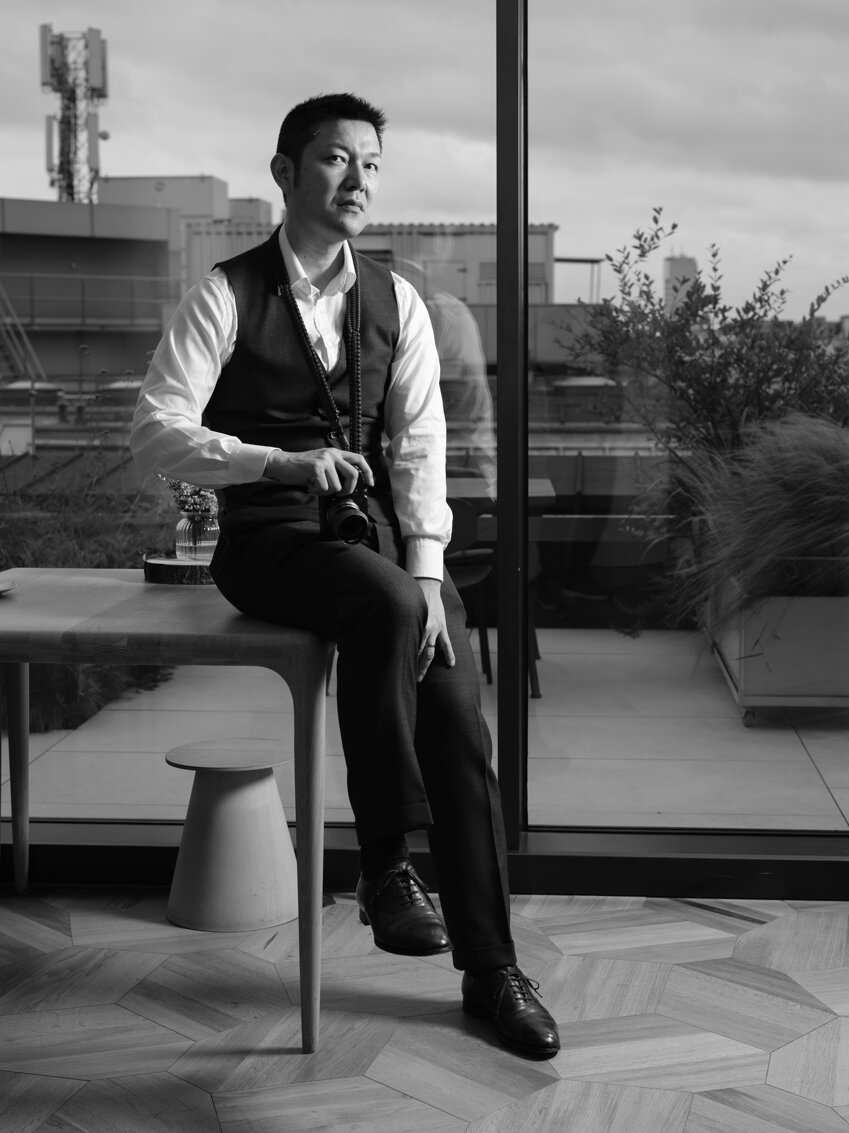
FUJIFILM GFX 100S II - Fujifilm GF 55mm f/1.7 R WR
I would just like to add something about the AF performance, as I can already foresee the flood of hasty judgments we will read from today onwards on the web. The performance of the AF is determined by two elements: the camera and the lens used. Now that the new GFX models implement high-performance solutions, suitable lenses will be released to fully exploit these features. Obviously, even the old lenses will be able to fully benefit from the new solutions adopted by the new models. But if you expect miracles from lenses like the GF 110mm f/2 R LM WR or the Fujifilm GF 55mm f/1.7 R WR, you are on the wrong track. They are spectacular lenses for portraiture, not for wildlife photography or chasing a Ferrari speeding down the straight at Imola.
I say this just for future reference.
I have also decided to publish some shots taken during a walk around Rome. By now, we all know the image quality of Fujifilm's 100MP. What I was most interested in understanding were the operational margins that this model can offer in photographic genres where medium format has never been the "recommended" system.
So, with subject detection AF activated for humans or animals, and the optimal reportage lens mounted (Fujifilm GF 45mm f/2.8 R WR), I start shooting and think: “How much time has passed since medium format was just an object relegated to the studio.”
And finally, something fantastic that had never happened to me before. With all the cameras I tested in preview, I was forced to shoot only in Jpg due to the obvious lack of software capable of handling raw files. Well, this time Adobe LR (latest version) was able to correctly develop the GFX 100SII raws already three weeks before the launch of the new Fujifilm. Just a coincidence?